5 Ethical Boundaries for ‘Human Simulation’
by Annalise Yuri Murphy
As a member of the coveted ‘creative class’, it’s our responsibility to reckon with the powerful tools at our disposal … and increasingly, the government is trying too. (crowd applause).
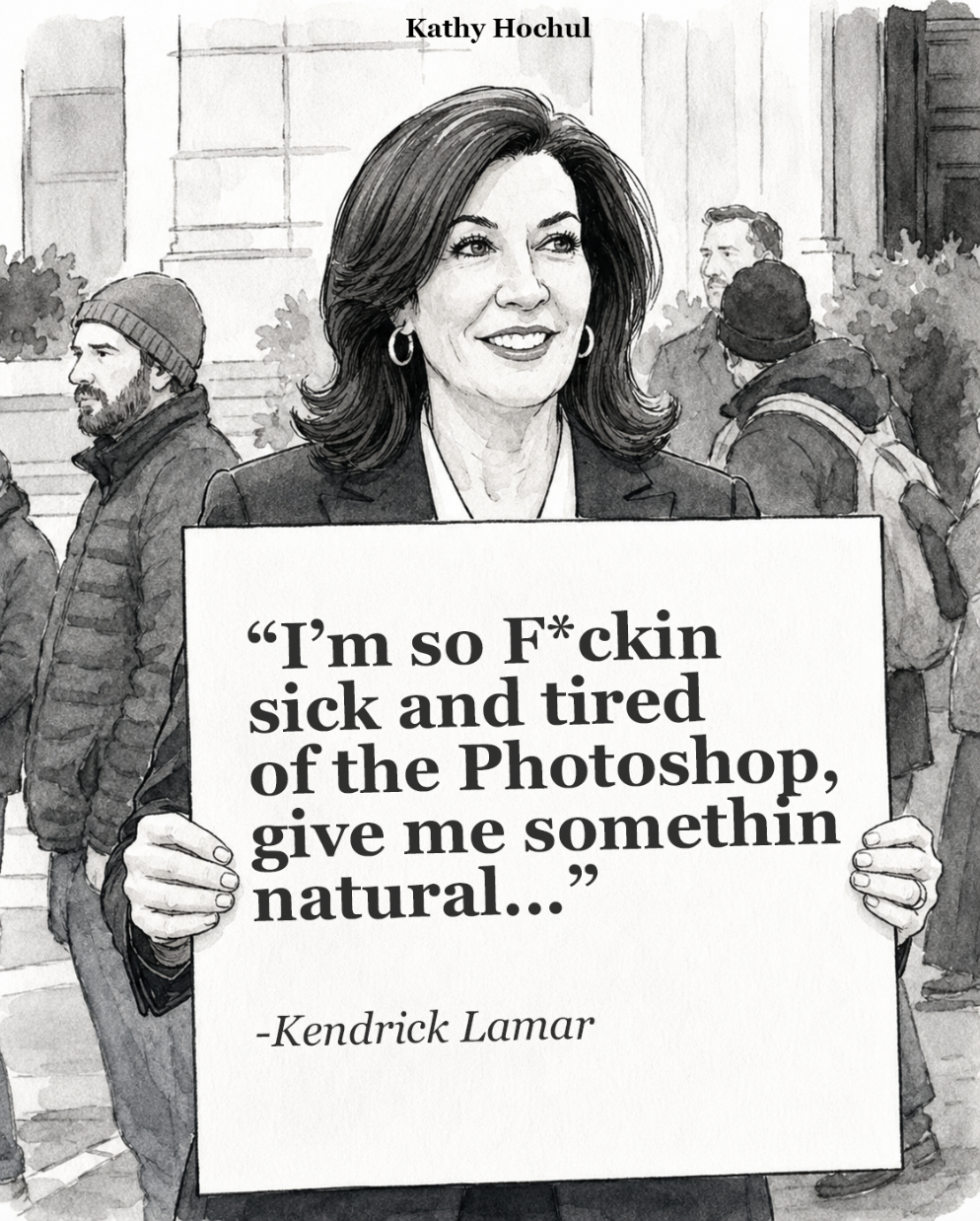
Starting in June 2026, New York’s new AI Transparency law will require advertisers to disclose, with FTC grade disclaimers, when advertisements feature an AI-generated ‘Synthetic Performer’. Kathy Hochul’s term, not mine.
As an artist, I’m pleased to see elected leaders attempt to establish guardrails around AI, advertising, performers, and try to protect the audience from getting duped … And as Creative Director, I’m wondering what is a ‘synthetic performer’ and where do you draw the line?
Every day generative models replace programs like Photoshop (sorry Adobe), not just with human enhancements but full mocks. It’s pretty clear that from concept development, to commercials, to Hollywood - the people on the silver-screen have never been more synthetic.
And the government, they know. The ‘AI Synthetic Performer’ law exempts promotional materials for films, television, streaming, and as long as the ‘Synthetic Performer’ is used consistently with the underlying work. This is a blatant acknowledgement that on screen talent, especially in high-end production, are often partially simulated, VFX-manipulated, retouched, composited, optimized, and algorithmically enhanced. It’s not a conspiracy theory, it's just how Batman is made.
So as a member of the creative class, artist, creative director, video director, female and human of this earth, it only feels right to share my independent guardrails and suggestions for the use of AI-Generated Humans, for advertising and production.
01
Human storytelling
should feature
real humans.
Telling human stories is what gives our work meaning. Telling those stories with real humans, transcends that meaning. The collaboration, the performance, holding space for magic to happen … That’s the work.
There is a place for ‘Synthetic Performers’ in experimentation, concepting, or even graphics heavy worlds. But for work reflecting the human experience, asking the viewer to connect emotionally, I believe in real people.
Rule 0102
Be mindful of diversity
Be mindful of identity, stereotypes, and diversity in AI-generated imagery, because internal mocks can quickly become real life.
The more I work in creative and advertising, the more I see how susceptible humans are to the imprint of visual imagery. Our subconscious easily retains visuals and how they made us feel.
Inevitably, mocks will affect production decisions down the line, but now with the hyper-realism of generative AI, agencies seem steadfast in locking in production choices based on what the client has already seen & liked.
Let’s continue to be mindful of prompts and inputs, question outputs, and hold the intention of our work to reflect the breadth of our audience.
03
Get consent & protect performing artist’s
autonomy
Take the extra steps to secure performing talent’s consent, before ingesting their assets into an LLM.
AI generators do best with references, but if a real person’s face, body, likeness, personality, or voice becomes creative input, they deserve agency.
Especially if you’re interested in collaborating, have them in a casting pool, on a callback, or they’re already committed to the project and have a direct line to them…just get their consent. Feeding someone's likeness into an algorithm, is different than a Photoshop comp.
Even if it’s “just internal.” Even if it’s “just a comp.”
04
Humans for impact,
AI for speed.
Advertising formats that rely big-time on time and space; OOH billboards, TV commercials, social sob-stories, generally ‘awareness level’, top of funnel assets, should feature real humans.
The more time that we spend with an asset, the larger its scale, the more opportunity we have for real human connection and to be connected to the brand. To experience the brand authentically. We shan’t be distracted by its algorithmic imperfections that we perceive consciously or subconsciously.
Super low-funnel-performance-enriched-targeted ads is where AI Simulations are most successful. AI for high volume and short attention spans, you either click quickly or you move on.
05
If you have the budget,
pay a human.
This one is going to get me fired …
If an agency, producer, or existing client-facing budget has line-itemed a talent fee; VO, art, music illustration, or any other human craft - use that money to hire talent.
Talented creatives all over the world are looking for work. And reminder that in the US, most artists sustain their practice by being in the industry.
If the money is there, somebody talented will be excited to do the work.